5 Meditative Asanas for Calm Mind and Deep Relaxation
Meditation and yoga have always gone hand in hand. In traditional yogic philosophy, meditation is not just about sitting quietly; it is about preparing the body and mind for stillness. Practicing the right meditative asanas helps you sit comfortably for longer periods, improves focus, and brings deep relaxation to the nervous system.
Ancient yogic texts like the Yoga Sutras of Patanjali describe meditation as a pathway toward mental clarity and inner awareness. To achieve that state, the body must remain steady and relaxed. That is where meditative yoga poses play a crucial role.
In this detailed guide, we will explore 5 meditative asanas for calm mind and deep relaxation, along with their benefits, techniques, and practical tips.
Understanding Meditative Asanas
Meditative asanas are seated postures designed to keep the spine erect and the body stable while minimizing physical discomfort. Unlike dynamic yoga poses, these asanas focus on stillness.
The primary goal of meditation yoga asanas is to:
- Maintain a straight spine
- Reduce muscular strain
- Promote deep breathing
- Encourage mental stillness
When the body is steady, the mind naturally becomes quieter. These poses activate the parasympathetic nervous system, helping reduce stress hormones and promote relaxation.
Benefits of Practicing Meditative Yoga Poses
Regular practice of meditative asanas offers numerous physical and mental benefits:
- Improves concentration and memory
- Reduces anxiety and stress
- Enhances posture and spinal alignment
- Promotes emotional balance
- Encourages deep and mindful breathing
Physical Benefits
Meditative sitting postures strengthen the back muscles, improve hip flexibility, and support proper spinal alignment. They also enhance blood circulation, especially in the lower body.
Mental and Emotional Benefits
These asanas calm the mind by regulating breath patterns. Slow breathing signals the brain to relax, reducing mental chatter and promoting clarity.
1. Padmasana (Lotus Pose)
Padmasana is one of the most recognized meditation postures. It symbolizes spiritual awakening and stability.
How to Practice Padmasana
- Sit on the floor with legs extended.
- Bend the right knee and place the foot on the left thigh.
- Bend the left knee and place the foot on the right thigh.
- Keep your spine straight and hands resting on knees.
- Close your eyes and focus on your breath.
Benefits of Padmasana
- Enhances concentration
- Promotes deep breathing
- Strengthens posture
- Encourages mental discipline
This pose is ideal for experienced practitioners who have good hip flexibility.
2. Sukhasana (Easy Pose)
Sukhasana is a simple cross-legged sitting posture suitable for beginners.
How to Practice Sukhasana
- Sit comfortably with legs crossed.
- Keep your spine straight and shoulders relaxed.
- Rest hands on knees with palms facing upward.
- Close your eyes and breathe naturally.
Why Sukhasana is Ideal for Beginners
Sukhasana is gentle and comfortable, making it perfect for long meditation sessions. It reduces stress and helps in achieving a calm state of mind without physical strain.
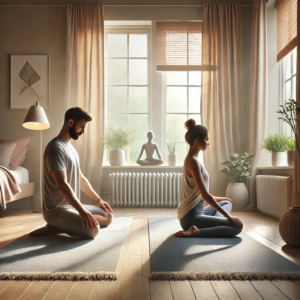
3. Vajrasana (Thunderbolt Pose)
Vajrasana is unique because it can be practiced even after meals. It improves digestion and promotes mental stability.
Steps to Perform Vajrasana
- Kneel on the floor.
- Sit back on your heels.
- Keep your back straight and hands on thighs.
- Close your eyes and focus on breathing.
Benefits of Vajrasana
- Improves digestion
- Enhances posture
- Calms the nervous system
- Increases focus during meditation
This pose is excellent for those who find cross-legged sitting uncomfortable.
4. Siddhasana (Adept Pose)
Siddhasana is considered one of the most powerful meditative asanas in classical yoga traditions.
How to Practice Siddhasana
- Sit with legs extended.
- Bend one leg and place the heel near the perineum.
- Bend the other leg and place it above the first ankle.
- Keep your spine erect and gaze inward.
Benefits of Siddhasana
- Enhances spiritual awareness
- Stabilizes energy flow
- Improves concentration
- Encourages deep relaxation
Siddhasana is often recommended for serious meditation practitioners.
5. Swastikasana (Auspicious Pose)
Swastikasana is a comfortable seated posture that promotes steadiness and ease.
Steps to Perform Swastikasana
- Sit with legs extended forward.
- Bend both legs and tuck each foot between the thigh and calf of the opposite leg.
- Keep the spine straight and shoulders relaxed.
- Close your eyes and meditate.
Benefits of Swastikasana
- Encourages mental peace
- Improves hip flexibility
- Supports long meditation sessions
- Reduces physical discomfort
It is ideal for those seeking stability without intense stretching.
Tips for Practicing Meditative Asanas Safely
To get the best results from these meditation yoga asanas, keep the following tips in mind:
- Practice on a comfortable yoga mat
- Use a cushion for hip support
- Keep the spine straight but relaxed
- Avoid forcing flexibility
- Start with shorter sessions and gradually increase duration
Consistency is more important than duration. Even 10–15 minutes daily can bring noticeable improvements in mental clarity and relaxation.
How to Choose the Right Meditative Asana
Choosing the right meditative posture depends on:
- Flexibility level
- Comfort
- Physical limitations
- Meditation duration
Beginners may prefer Sukhasana, while advanced practitioners may choose Padmasana or Siddhasana. The key is comfort and stability.
Remember, the best asana for meditation is the one you can hold comfortably without distraction.
Integrating Breath Awareness with Meditative Asanas
Breathing plays a vital role in enhancing the benefits of these poses.
Deep Breathing Technique
- Inhale slowly through the nose
- Expand the abdomen
- Exhale gently and completely
- Maintain steady rhythm
Breath awareness deepens relaxation and improves focus during meditation.
Combining Asana with Mindfulness
While sitting in your chosen posture, observe your thoughts without judgment. Gradually, mental noise reduces, and calmness increases.
This combination of posture and breath awareness forms the foundation of meditation practice.
Practicing these 5 meditative asanas for calm mind and deep relaxation can transform your daily routine. By incorporating steady posture, mindful breathing, and consistency, you create a foundation for mental peace and emotional balance. Over time, these meditation yoga asanas help cultivate clarity, stability, and inner harmony—leading to a deeply relaxed and centered state of being.
Frequently Asked Questions (FAQs)
1. Which is the best meditative asana for beginners?
Sukhasana (Easy Pose) is the best option for beginners because it is simple, comfortable, and easy to maintain for longer periods.
2. How long should I sit in a meditative asana?
Start with 5–10 minutes and gradually increase to 20–30 minutes as your comfort and flexibility improve.
3. Can I practice meditative asanas daily?
Yes, these poses are safe for daily practice. Regular practice enhances mental clarity and emotional balance.
4. What if I feel pain while sitting?
Mild discomfort is normal initially, but sharp pain should be avoided. Use cushions or switch to a more comfortable posture.
5. Are meditative asanas suitable for stress relief?
Absolutely. These poses activate relaxation responses in the body and help reduce stress and anxiety levels.
6. Can meditative asanas improve concentration?
Yes, by keeping the body steady and regulating breath, these asanas enhance focus and cognitive function.