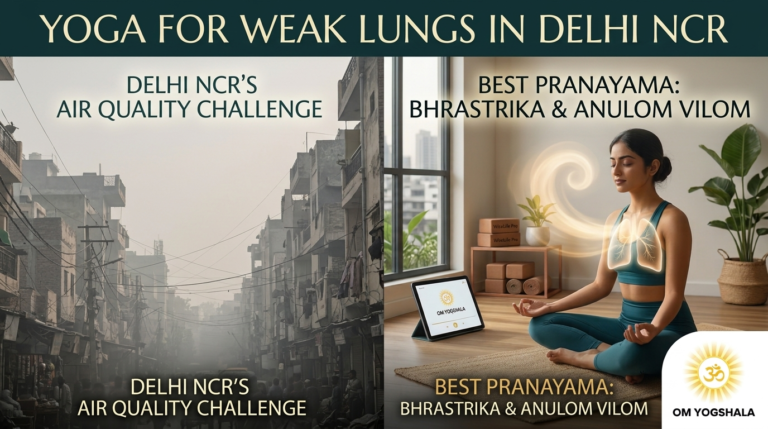
Yoga for Weak Lungs in Delhi NCR: Best Pranayama & Indoor Fitness Classes
Living in Delhi, Noida, Gurugram, or anywhere across the NCR region means constantly battling fluctuating air quality—especially during winter smog and dusty summer months. Consequently, poor air quality affects everyone, from school-going children and daily commuters to fitness enthusiasts and senior citizens. Among all body organs, your lungs are the very first to suffer from daily pollutant exposure.
However, you do not have to accept breathlessness or recurring seasonal coughs as a normal part of city life. Scientific research confirms that targeted yoga asanas and controlled breathwork (Pranayama) significantly strengthen weak lungs, expand respiratory capacity, and protect your airways from environmental toxins.
Below, we explain how Om Yogshala’s specialized breathwork and indoor fitness sessions help Delhi NCR residents breathe deeper and stay healthier year-round.
Why Lung Health Requires Extra Care in Delhi NCR
Every breath you take in high-AQI zones carries microscopic particulate matter (PM2.5 and PM10), vehicular exhaust, and industrial dust deep into your alveoli. Over time, continuous exposure to these irritants triggers chronic inflammation and leads to noticeable symptoms:
Shortness of Breath: Feeling winded quickly while climbing stairs or walking briskly.
Persistent Cough & Wheezing: Morning throat irritation, phlegm buildup, or dry coughing spells.
Reduced Stamina: Low blood oxygen saturation causing daytime lethargy and brain fog.
Heightened Allergies: Increased sensitivity to dust, pollen, and sudden weather shifts.
Therefore, strengthening your respiratory system is no longer optional—it is an essential preventive health priority for anyone living in Delhi NCR.
How Yoga & Pranayama Help Weak Lungs Recover
Unlike high-intensity outdoor cardio—which forces you to inhale large volumes of polluted air rapidly—indoor yoga works gently on both lung mechanics and nervous system regulation. Specifically, regular practice delivers four measurable respiratory benefits:
Expands Thoracic Capacity: Chest-opening postures stretch tight intercostal muscles between the ribs, allowing your lungs to inflate more fully.
Strengthens the Diaphragm: Deep diaphragmatic breathing trains your primary breathing muscle to pull oxygen efficiently into the lower lobes of the lungs.
Clears Mucus & Toxins: Controlled exhalation techniques stimulate natural airway clearance and improve lymphatic drainage.
Calms Airway Constriction: Stress and anxiety tighten bronchial passages; consequently, slowing your breath relaxes smooth airway muscles and eases breathlessness.
Indeed, clinical pulmonary studies indexed on PubMed Central (National Institutes of Health) demonstrate that structured Pranayama practice improves forced vital capacity (FVC) and peak expiratory flow rate in individuals with compromised respiratory endurance.
Best Pranayama Techniques for Stronger Lungs
Pranayama—the ancient yogic science of breath regulation—acts as targeted physical therapy for your respiratory tract. At Om Yogshala, our certified instructors guide you step-by-step through safe, progressive Meditation & Pranayama protocols tailored to your lung capacity:
| Pranayama Technique | How It Works | Key Respiratory Benefit |
| Anulom Vilom (Alternate Nostril Breathing) | Balances airflow between left and right nasal passages with slow, rhythmic retention | Clears nasal blockages, lowers respiratory rate, and improves oxygen absorption |
| Bhastrika (Bellows Breath) | Active, rhythmic inhalations and exhalations using full diaphragmatic movement | Strengthens respiratory muscles and boosts stale-air expulsion from lower lungs |
| Bhramari (Humming Bee Breath) | Gentle exhalation accompanied by a steady, soothing humming vibration | Increases natural nitric oxide production in nasal sinuses, helping open airways |
| Dirga Pranayama (Three-Part Breath) | Sequential filling of the abdomen, ribcage, and upper chest | Reverses shallow chest breathing caused by desk posture and chronic stress |
(Note: Beginners with high blood pressure, heart conditions, or active asthma flare-ups should always practice intense breathwork like Kapalabhati or Bhastrika under qualified supervision.)
5 Chest-Opening Yoga Asanas to Protect Against Pollution
In addition to breathwork, physical postures release stiffness in the upper back and chest caused by slouching over laptops and smartphones. Practicing these five asanas regularly creates physical space for deeper breathing:
Bhujangasana (Cobra Pose): Gently arches the upper spine and lifts the sternum, expanding the front chest wall and stimulating lung tissue.
Matsyasana (Fish Pose): Stretches the throat, neck, and intercostal muscles deeply while encouraging full upper-lobe lung expansion.
Ustrasana (Camel Pose): Opens the entire anterior ribcage and reverses rounded shoulders, making it ideal for desk workers.
Setu Bandhasana (Bridge Pose): Elevates the chest toward the chin, improving blood circulation to the lungs and calming nervous tension.
Ardha Matsyendrasana (Seated Spinal Twist): Massages the thoracic cavity and squeezes stale residual air out of the lungs during exhalation.
Why Indoor Home Yoga Is Safer During High-AQI Days
When Delhi NCR’s Air Quality Index crosses the “Very Poor” or “Severe” mark, outdoor jogging or park yoga does more harm than good. Instead, practicing inside a clean, ventilated room protects your airways while keeping your fitness routine intact.
Through our Home Yoga Classes in Delhi, you can practice safely in your own air-purified living space without stepping outside into traffic fumes. Furthermore, elderly parents who are most vulnerable to winter smog benefit tremendously from gentle, customized Yoga for Senior Citizens conducted right in the comfort of their homes.
Frequently Asked Questions (FAQs)
1. Can Pranayama completely cure weak lungs or asthma?
Pranayama is a powerful complementary therapy that strengthens respiratory muscles, improves stamina, and reduces breathlessness triggers. However, it should work alongside—not replace—any prescribed medical treatment from your pulmonologist.
2. How many minutes of Pranayama should beginners practice daily?
Starting with 15 to 20 minutes every morning on an empty stomach is ideal for beginners. Gradually, as your breath control improves, you can combine 25 minutes of chest-opening asanas with 20 minutes of Pranayama.
3. Is it safe to do Kapalabhati if I have breathing issues?
Rapid breathing techniques like Kapalabhati can feel overwhelming if you have severe breathlessness, hypertension, or vertigo. Therefore, beginners should start with gentle Anulom Vilom and Dirga Pranayama under a certified instructor’s guidance before attempting vigorous kriyas.
4. Do you offer indoor respiratory yoga sessions in Noida and Gurugram?
Yes, we do. Om Yogshala provides certified, background-verified home yoga trainers across Delhi, Noida, Greater Noida, Ghaziabad, Faridabad, and Gurugram.
Breathe Stronger and Live Healthier with Om Yogshala
Pollution and busy urban schedules should never force you to compromise on your lung health. Whether you are recovering from seasonal respiratory fatigue or want to build lifelong stamina, Om Yogshala designs safe, indoor yoga and Pranayama programs around your exact health profile.
Contact Om Yogshala today to book a personalized indoor respiratory wellness session at your doorstep!